Showing posts with label dual core. Show all posts

Review & First Look : Huawei Ascend G600 The Snapdragon S4 Gangstar

Monday, 21 January 2013


 Huawei being the leading company for years in manufacturing telecommunication
Yet their device are not that well known due to factor user primary considering the device as a "China" branded device.On this review we are looking on the Ascend G600 the come back attack from Huawei which launch together with it's sibling the D1 Quad and G330.Mostly aiming a budget quality product yet stylish design.

Design and Feel

Ascend G600 is available with either Black and White color choice.It has glass feel panel
on the front with 3 capacitive button at the bottom of the screen.The rear battery cover is
coated plastic which is good (non finger print magnet)
Design offer mainly derive from the Huawei Honor Series which has the square body with curve edges.The design ain't going to impress anyone or particular stylish as well but hey Ascend G600 have solid feel and not feeling cheap to hold on.


 Display 

 It's not big to hold on a 4.5" Ascend G600 maybe because i'm use to my 4.7" One X which sometime
the slim bezel G600 feel small to me but somehow G600 will fit any user hand well including their pocket.There's nothing much to company except the display having some glaring using under sunlight but overall brightness level is good enough for day to day usage.
Packed with qHD display on a 4.5" device is great because having higher PPI thus enhancing user viewing experience especially viewing video with vivid color and not washed out.

Camera

This is a aspect to be taken count for user that considering a day to day use phone that pack all-in-one features like myself.Camera quality is not washed out like many budget device out there with balance saturation produce on the picture.The Ascend G600 pack with 8MP BSI Camera (Rear) & 0.3MP(Front)which is a boomer.
With additional HDR,Panorama Features and BSI package it produce vivid output image.
There's bunch of setting which can be access by tapping on the arrow button and selecting the multiple option offer.Front camera are also having acceptable quality of video and image.Moving shoot seem to be ok.A sample of image (untouched) inside a moving car below :


 The downside on the Ascend G600 is the issue of unable to record even HD video lefting it to be only able to be capturing video up to FWVGA (HQ) video which is minus on this device.Eventhough video quality not consider as bad but lack of HD & FullHD option isn't the best choice to be day-to-day camera phone.

Software


The Ascend G600 is powered by Huawei Emotion Ui layer on top stock AOSP android 4.0.4
Keeping the system as stock as possible but with some of tricks from Huawei.
 With this method keeping the ram usage low and fluid device as the same time User Interface looks great and cool.
The User Interface can be change by accessing menu button and selecting theme setting and there's 3 choice available.Just a simple as that to switch from stock ui or Huawei customized ui.

Software developer over Huawei did a great job by featuring both of Power Saving Mode and Fast boot.Both of this features is normally found on HTC devices.Power saving mode will one of the best to have on these days as smartphone becoming more hunger on battery life.The G600 power saving mode will prompt to request to be enable as soon the battery drop below 30%.


 Extra features that being the selling point of the Ascend G600 is the capability of NFC which being a new standard for phone to have it.This one super fast way to transfer files from phone to phone as well different usages of NFC by just tapping on NFC enable devices or Tag.As i mention before on the Star S1 review,i really like shortcut button that give user easy access to setting without digging that wasting precious time.

Performance

 Ascend is powered by all new Snapdragon S4 (Cortex A5) 1.2ghz which seem to be a lot.
This a good to chance to let me explain to user out there about the speed of processor doesn't represent true speed of the processor.On the MSM8225 that powered the G600 offer a moderate speed but i found out that it have relative slow down during switching between page or opening an app.Graphic neither doesn't perform quite well as the Adreno 203 isn't the best choice for gaming.
Suffering on graphic glitches on Subway Surf and Dead Trigger even worst.Nevertheless the gaming experience is still playable but it might be software issue. 
The Dual Core powered G600 score relatively low especially on Quadrant.
Seem to be the processor is being defeated by other dual core device including the Star S1 which we reviewed recently which scored 6610 on Antutu and 3036 on Quadrant even it's clocked at 1.0ghz.
Processor speed doesn't really matter but i guess due to low amount of ram(768mb) drag down all the performance of this little monster.

Sound

 The most biggest selling feature of the Huawei Ascend G600 is the Stereo DTS powered speaker
Awesome sound output with loud volume than most device you can bring on the party.
Even being the loudest,the DTS optimization keep it clear and without shattering.
Lovely speaker.A huge thumb up on that Huawei!


Verdict

Huawei have did a great job on both hardware and software to keep the Ascend G600 fly.
Great quality of build that feel solid and packed with beautiful looking qHD screen.
For the price of RM799 this device making it the affordable as the features offer are tempting
even though it suffer from some hold back by it's performance.


What I Like : 
  •  Solid Body Feel (Nice to hold)
  • Slim Bezel
  • qHD 4.5" Display
  • Front Camera are not washed out
  • Rear Camera that takes vivid photo 
  • Clean and glass feel of the display and front panel
  • 1930mAh Battery
  • Gaming and Apps compability via Google Play
  • Expandable storage via microsd
  • Power Saving Mode
  • NFC Feature
  • HDR Feature
  • Fast Boot
  • DTS Stereo Speakers
  • Rear body that non fingerprint magnet
  • Removable Battery.

What I Dislike :
  • No HD/Full HD on 8MP BSI Camera
  • Outdated Operating System 4.0.4 (Currently 4.2.1 Jellybean is the latest)
  • Performance slow down on the MSM8225 Dual Core processor


[Unboxing & First Look]Star S1 5.3 " qHD 4.1 Jellybean Dual Core 1ghz

Wednesday, 16 January 2013

As we mention before on our blog post before this that Star Mobile Group are introducing their all new Star S1.We manage to have the phone for review purposes.
Below are the video of unboxing and the first look of the white version of the awesome budget friendly device.We will post a full review on the consumer feedback as well as tips to get the best out of the smartphone itself.
Do remember to like us on Facebook as well as GizmoAsia Facebook Page and Youtube Channel


News : Samsung unveils Galaxy S II Plus with Android 4.1.2 Jelly Bean OS

Thursday, 10 January 2013

Samsung Electronics Co., Ltd. announced today Samsung GALAXY S II Plus, which combines the performance that have made the GALAXY S II one of the world’s most recognized phones, together with nature-inspired user-interface and intuitive features that greatly boost its usability and functionality.
• The GALAXY S II Plus runs on Android™ 4.1.2 (Jelly Bean) enabling faster and smoother screen transitions, and
providing an enhanced user interface featuring a new, easier-to-use notification panel. It is powered by an impressive
1.2 GHz dual core processor that enables easy multi-tasking, smooth screen transitions and superior graphics for
some of the most demanding applications and games.
GALAXY S II Plus Product Image (7) GALAXY S II Plus Product Image (5)GALAXY S II Plus Product Image (1)
• The GALAXY S II Plus’ nature-inspired user-interface is complemented with intuitive features that make the phone really
easy to use. Direct Call enables users to automatically dial a call by taking the device to the ear. Smart Stay recognizes
whether the user is looking at the screen to dim the screen accordingly; while Smart Alert lets users know about
missed events or status updates just by picking up the phone.
• The GALAXY S II Plus also sports a range of additional features that boost performance and the overall experience in
entirely new ways. Popup Video allows a video to play anywhere on the screen in a resizable pop-up window while
simultaneously running other tasks, eliminating the need to close and restart videos when checking new emails or
surfing the Web. S Voice lets users control the phone using their voice; and Voice Unlock lets users unlock the phone
using their own voice.
• A 4.3” WVGA Super AMOLED Plus display offers a generous viewing experience and enables photos captured with the
powerful 8MP camera to be enjoyed in true clarity.
• The rear camera features a zero-lag shutter speed that captures moving objects easily without delay. The innovative
‘Buddy photo share’ function also allows images to be easily and simultaneously shared with friends pictured in an
image directly from the camera or the photo gallery. Additional features include Group Facetag and Face Zoom to
deliver a complete photographic experience. The device is packed with the latest Samsung content services including
AllShare Play, which lets users share content across Samsung devices using a single account and password.
Users can also enjoy all the benefits of Samsung Hubs, including the latest versions of Readers Hub, Video Hub,
Game Hub and Music Hub.

CES 2013: ACER OFFICIALLY REVEALS ICONIA B1 TABLET, AT UNDER RM 500 (USD 150)

Tuesday, 8 January 2013

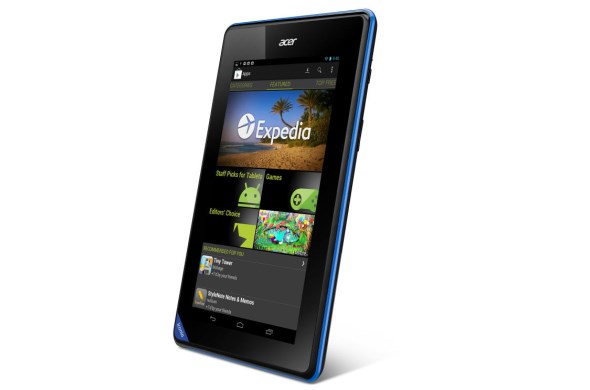
While it might be not be as cheap as what it has been previously  rumored, Acer Iconia B1-A71’s price tag of under RM 456 (USD 150) is still quite attractive. Officially announced by Acer just moments ago, the 7-inch tablet is targeted for new and young users as well as an additional tablet for a family.
It is actually quite obvious on how Acer managed to keep the tablet’s price down. For starters, it is only equipped with 8GB worth of internal storage which is fortunately is expandable via MicroSD card. Furthermore, it doesn’t come with any cellular network capability and rear camera. Instead, the tablet is equipped with only Bluetooth 4.0 and Wi-Fi connectivity as well as a 0.3-megapixels front-facing camera.
On another hand, the new Acer Iconia B1-A71 runs on Android Jelly Bean and is powered by a 1.2GHz Mediatek 8317T dual-core processor together with 512MB of DDR3 RAM which are not too shabby at all. Weights at 320g, other features included into the tablet are 7-inch capacitive multitouch display with a resolution of 1024×600, built-in speaker, 3.5mm audio jack, USB 2.0 micro-USB port, GPS and 2710mAh battery.
All in all, the new Acer Iconia B1-A71 is pretty much in the same class as Google Nexus 7 by ASUS but is it attractive enough for Malaysian consumers? Well, we believe that will be up on its actual price tag once or if Acer Malaysia actually decides to release it in our market.

Acer Iconia B1 budget tablet pops up in Bulgaria, undergoes a thorough review

Saturday, 5 January 2013

The Acer Iconia B1 is a 7 inch tablet with a 1.2 Ghz processor and Android 4.1 software. It’s a budget tablet that hasn’t officially been announced by Acer yet, but it has a habit of showing up anyway.
It passed through the FCC and an online benchmarking site recently. And the Wall Street Journal reports it will sell for around $99 in emerging markets such as China.
Now the folks at Bulgarian site Tablet.bg have gotten their hands on an Acer Iconia B1, which they say will sell for about $235 in that country soon. They’ve posted a series of photos, test results, and plenty of details about Acer’s upcoming budget tablet.
Acer Iconia B1
Powered by a 1.2 GHz MediaTek 8317 dual core processor, the Iconia B1 isn’t exactly a speed demon. But it does earn winning marks in size: it’s apparently the same weigh as an Apple iPad mini and lighter than an Asus Nexus 7 or Amazon Kindle Fire HD tablet.
The tablet has a 7 inch, 1024 x 600 pixel display, 512MB of RAM, 8GB of storage, PowerVR SGX531 graphics, a front-facing 2MP camera, and 802.11a/b/g/n WiFi and Bluetooth 3.0 as well as GPS.
It’s not clear whether Acer has any plans at all to sell the Iconia B1 in the US, so I don’t really expect to see the tablet at CES next week — but I’ll keep an eye out for it anyway.

Velocity Micro D610, Q610 tablets feature dual, quad-core processors

Friday, 4 January 2013

Velocity Micro’s newest tablets are 10 inch models with multi-core processors and Android 4.1 software. Prices should start at about $199 when the tablets go on sale during the first quarter of 2013.
The Velocity Micro Cruz D610 and Cruz Q610 are also some of the first tablets that will ship in the US with multi-core processors from Chinese chip-makerAllwinner.
velocity cruz 610
Allwinner recently launched the new multi-core processors, including a dual-core chip which is pin-to-pin compatible with the popular single core Allwinner A10 chip. That makes it easy for device makers to update existing products to feature the newer, faster processor.
The Velocity Micro Cruz Q610 will feature a 1.5 GHz Allwinner A31 quad-core CPU, while the Cruz D610 has a dual core Allwinner A20 chip.
via Engadget

Acer V360 leaks, is the company's first Jelly Bean droid

Friday, 14 December 2012


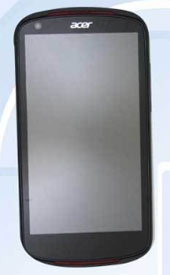
A photo and some specifications of Acer's first Jelly Bean smartphone have leaked. Sadly, the Acer V360, as it's called, runs Android 4.1, rather than the newer 4.2 release, but that might not be too big an issue, considering its mid-range allegiance.
Built around a 4.5-inch display of qHD resolution (960 x 540 pixels), the V360 boasts a 1GHz dual-core processor of unknown variety. RAM and storage are still anyone's guess, but judging by Acer's habits, it's likely it will throw in an microSD card slot.
At the back, there's a 5MP camera, while at the front a VGA front-facing shooter enables vide chat. According to the leak, the device will weigh 140 grams and measure 132.0 x 68.5 x 9.9 mm, which seems about right for a mid-ranger with a 4.5" screen.
The Acer V360 will be available in black and white and will reportedly cost around $300. Availability is yet unknown, but rumors point to a release in the first quarter of next year.
Source | Via

YotaPhone Dual Display (LCD + E-Ink) Smartphone Hands-on Video

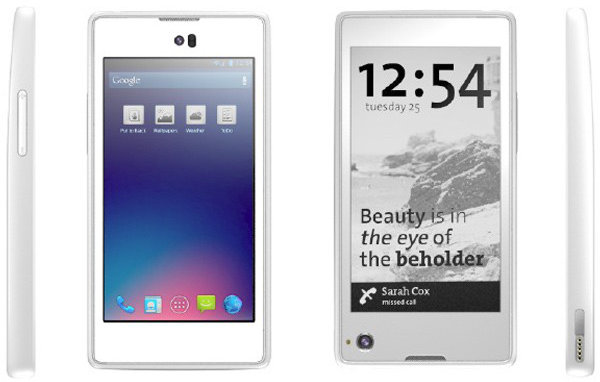
In the last few days, there has been a lot of buzz about the YotaPhone, an upcoming Russian Android 4.2 smartphone featuring Snapdragon MSM8960 dual core processor with 2 GB RAM and 32/64 GB Flash. But the real innovation is the presence of 2 full 4.3″ displays: a standard LCD display on one side, and an E-Ink display on the other.
Here are the preliminary specifications of the YotaPhone:
  • SoC – Qualcomm Snapdragon S4 MSM8960 dual core Krait processor @ 1.5 GHz
  • System Memory – 2GB RAM
  • Storage – 32 or 64 GB NAND Flash
  • Display
    • 4.3″ LCD Display (1280×720)
    • 4.3″ E-Ink EPD display
  • Camera – 12MP front camera
  • Connectivity
    • Wi-Fi (Direct)
    • Bluetooth
    • NFC
    • 2G, 3G and 4G (LTE) mobile networks
  • Audio – 3.5mm headphone jack
  • Battery – 2100 mAh. The device supports wireless charging.
  • Dimensions – 67 x 131 mm
  • Weight – 140 grams
You may think a smartphone with 2 displays will badly drain the battery, but the contrary may prove true. First, since the E-Ink display does not use power if the display content is not updated, it may not use very much power. Second, you may use the E-Ink display to do tasks such as checking the time, and receiving notification (missed call, SMS..) while the LCD display if turned off, which should prolong battery life.
The YotaPhone will run Android 4.2 Jelly Bean, and should be available in Q3 2013 in Russia, and Q4 2013 in the rest of the world.
An hands-on video has been uploaded to YouTube with Anton Tarasenko, head of product development at Yota Device, showcasing the YotaPhone. First, he gives an overview of the phone, then shows some features and use cases:
  • EPD screen personalization app – You can select a wallpaper and other things to display on the EPD screen via an App running on the LCD.
  • Run Google Apps on the LCD screen, and “transfer” the map to the E-Ink display, so that even if your battery runs out, the map will still be displayed, and you won’t get lost.
  • If reading a book on a 4.3″ display is your thing, you can do so on the E-Ink display. Since the EPD does not have touch capability, you can scroll pages by swiping the zone at the bottom of the phone.
  • You can configure the YotaPhone to send notifications to the EPD display instead of the LCD display.

This looks quite nice, but I think it could have been useful to have a touchscreen with the EPD display, to make it more versatile, and allow you to make calls and/or write SMS directly from the EPD display for example. However, you would have to find some clever ways to disable touch on the display which is not in use.
You may find more information on Yota Devices website.

News : Allwinner introduces dual and quad-core tablets

Tuesday, 11 December 2012

Chinese chip maker Allwinner has introduced two new processors for tablets, TV sticks, and other low power devices. They’re dual and quad-core chips called the Allwinner A20 and Allwinner A31, respectively.
Allwinner A31
Allwinner A31
The Allwinner A10 single-core chip has been a relatively popular chip with Chinese device makers due to its low price and decent performance.
That’s the processor that powers the original MK802 Android 4.0 Mini PC and a number of other mini PCs. It’s proven popular with tinkerers, because Android isn’t the only supported operating system. Users have been installing Ubuntu and other Linux-based software on Allwinner A10 devices for months, and the PengPod line of tablets are expected to ship soon with a desktop Linux operating system preloaded.
While the Allwinner A10 is a single core ARM Cortex-A8 processor with Mali 400 graphics, Allwinner’s new chips feature faster ARM Cortex-A7 cores and more powerful graphics.
Allwinner A20 dual-core
Allwinner’s A20 is a dual core chip with 512KB of L2 cache and 128KB of L1 cache, dual-core Mali 400 graphics, and support for 2160p HD video playback.
This chip is pin-to-pin compatible with the Allwinner A10, which means that device makers should be able to quickly and cheaply upgrade existing designs to feature the new processors.
Unfortunately there doesn’t appear to be any official support for Linux yet... but it’s not out of the question.
Allwinner A31 quad-core
This quad-core chip features 1MB of L2 cache, 256KB of L2 cache, and PowerVR SGX 544 graphics. It supports 4K ultra high definition video decoding.
While the A31 is also an ARM Cortex-A7 chip, it’s not pin-to-pin compatible with the company’s earlier chips the way the Allwinner A20 is. And since the PowerVR graphics are licensed from Imagination Technologies (a company that’s not known for releasing source code), it’s unlikely that we’ll see strong Linux support for this chipset.

Closer look at FXI Cotton Candy’s $199 any-screen computer

Saturday, 17 November 2012

The FXI Cotton Candy is a tiny computer that’s about the size of a USB flash drive. One one side is a USB port, and on the other is an HDMI connector. And in between there’s a 1.2 GHz Samsung Exynos 4210 dual-core processor, 1GB of RAM, and ARM Mali 400 graphics.
It’s been a little over a year since FXI first introduced the Cotton Candy, and in that time we’ve seen dozens of cheap Android devices that you can plug into a television, some costing less than $50. But FXI charges $199 for the Cotton Candy.
I caught up with FXI CEO Borgar Ljosland recently and had a chance to ask him what sets the Cotton Candy apart.

Surprisingly, Ljosland actually seemed excited when I brought up the competition. That’s because they’re helping to popularize the idea of a portable device that you can plug into any TV to run Android apps on a big screen.
But the Cotton Candy does a few things that most of those devices don’t.
First, FXI calls its device an “any screen” computer. That’s because it doesn’t just work with televisions or monitors. You can also plug it into a Mac, Windows, or Linux computer to run Android apps on a PC. Sort of.
What actually happens is that the computer treats the Cotton Candy as a standard USB drive. But on that drive there are apps for OS X, Linux, and Windows that launch virtualization software, letting you basically login remotely to the Cotton Candy without leaving your desktop environment.
In other words, it’s still that Exynos processor and Mali Graphics chip that’s doing the heavy lifting, not your computer’s processor. Any apps you’re using are runnin on the stick. But you’ll see them in a window on your computer. The process is pretty seamless and Android apps looked pretty responsive in the Mac and Windows computers Ljosland showed me.
Another thing that helps set the Cotton Candy apart is that it’s not limited to running Android. We’ve seen plenty of independent developers port Ubuntu and other Linux distributions to run on cheap mini PCs like the MK802. But FXI officially supports Ubuntu as well as Android 4.0.
So if you buy an FXI Cotton Candy stick, you have a choice of using it to run Ubuntu or Android. Right now that means Android 4.0 or Ubuntu 12.04, although FXI could release updates for either operating system… or independent developers could do the same.
Right now, Ljosland says there are 160 different companies trying out the Cotton Candy, either to see if they can use it in their businesses or to develop applications that run on top of it.
At this point, the company is targeting the device at developers, which is another reason for the $199 price tag. Anyone can pick up the stick-sized-computer and use it for non-development purposes, but it’s not really meant to be a consumer device just yet.
On the other hand, if you’re a company with a large number of employers that may need to use different computers at different locations, this sort of solution would let you give each user a computer that they can fit in their pocket. It would store all of their files, settings, and apps, and they could pick up where they left off by plugging the device into any PC or display.
FXI Cotton Candy
Ljosland also seems convinced that the Cotton Candy offers better performance than many of the cheap Chinese sticks we’ve seen, but that’s probably a matter that’s up for debate. It basically has the same guts as a Samsung Galaxy S II smartphone, which is a bit dated at this point.
The stick features WiFi and Bluetooth support and FXI ships it with an 8GB microSD card — which is the only storage the Cotton Candy has. There’s no built-in storage space.
Here’s a recap of what you get with the $199 Cotton Candy stick:
  • 1.2 GHz Samsung Exynos 4210 dual core ARM Cortex-A9 processor
  • quad-core ARM Mali 400 graphics
  • 1GB RAM
  • microSD card slot for up to 64GB of storage
  • 802.11b/g/n WiFi
  • Bluetooth 2.1
  • USB 2.0 male port
  • HDMI port
  • micro USB port
You can keep up with the software development, and see more of what people are doing with the Cotton Candy in the FXI forums.

Ainol launches Novo 10 Hero tablets with dual, quad core CPUs

Tuesday, 6 November 2012

Chinese device maker Ainol has two new 10 inch Android tablets in the works. Both feature 1280 x 800 pixel IPS displays and Android 4.1 Jelly Bean software, but the Ainol Novo 10 Hero II has a quad-core processor while the cheaper Novo 10 Hero has a dual-core CPU.
ainol novo hero ii
Gadget Greats is selling the Novo 10 Hero II for $240 and the Novo 10 Hero for $194.
The cheaper dual core model features a 1.5 GHz Amlogic 8726-MX processor with Mali 400 graphics, 1GB of RAM, 16GB of storage, front and rear cameras, microUSB, mini HDMI, and microSD card ports. The tablet has an 800mAh battery and features WiFi and Bluetooth.
The Ainol Novo 10 Hero II has a 1.5 GHz Actions Semiconductor ATM7029 qud-core processor and ARM Mali 400 graphics. The rest of the specifications are the same as those for the dual core model.
I haven’t heard much about the ATM7029 processor, but there’s a discussion thread about the chipset at the SlateDroid forum. Just because a processor has 4 cores doesn’t necessarily mean it will be faster than a dual core CPU, but theoretically multi-core architecture can lead to speedier performance especially when running tasks that support multi-threading, or running multiple apps at once.
Multi-core chips can also help keep power consumption low by allowing a tablet to run several cores while achieving similar performance to what you’d get when running a single core at a higher speed.
It won’t be clear whether the Novo 10 Hero II benefits in either of those ways until we start to see some hands-on performance tests.

News : Samsung I9260 Galaxy Premier GLBenchmark scores reveal GPU

Tuesday, 23 October 2012


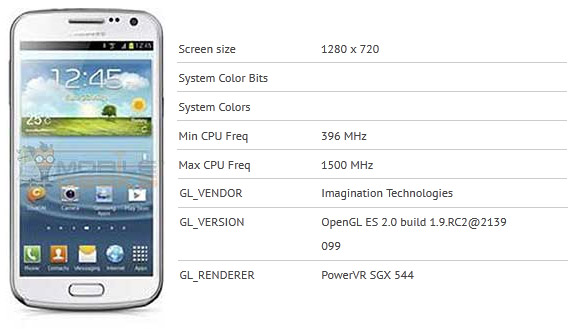
The Samsung I9260 Galaxy Premier was once rumored as the next Galaxy Nexus phone, but those rumors were renounced. The Premier sits somewhere between the Galaxy S III and the S III mini and now we know its GPU (and most likely chipset) thanks to a GLBenchmark score.
GLBenchmark reports Android 4.1.1 Jelly Bean and 720p resolution (that's exactly 1280 x 720 pixels, which confirms there won't be on-screen controls). The CPU max frequency is listed as 1.5GHz and while the number of cores was left out, the rumors point to a dual-core processor.
The GPU is a PowerVR SGX 544, very similar to the SGX543 found in Apple's latest chipsets. All of this - plus some AnTuTu scores from last week - point to a TI OMAP 4470 chipset (recently used in Amazon's Kindle Fire HD 8.9 tablet).


This means the I9260 Galaxy Premier has two Cortex-A9 cores, probably 1GB of RAM and the SGX544 GPU. Other Android chipset makers rely on Mali (Samsung's Exynos), GeForce (Tegra) or Adreno (Qualcomm), which leave Texas Instruments.
We know it's not a Cortex-A15 packing OMAP 5 chipset (which has a dual-core CPU and SGX544 too), because the AnTuTu CPU scores are below those of the HTC One S and its two Krait cores.
Anyway, the Galaxy Premier is not going to dethrone the Galaxy S III, but it does look more temtping than the NovaThor-packing Galaxy S III mini. We're still waiting for the Samsung I9260 Galaxy Premier to be officially announced.
Source | Via

LG Nexus smartphone expected to be announced on October 29

Thursday, 11 October 2012


The LG Nexus smartphone rumors are coming in thick and fast, with each one adding a new piece to the puzzle that is very close to being complete.
First off, there are couple of new pictures as seen below that show the phone in a better light. The back says 'with Google' that has raised a few questions, as Nexus phones usually have just the Google logo on the back. Then again, this is not a final product so the back could change by the time it releases. In fact, from what we have heard, the actual phone has a Nexus logo, with a big multi-colored 'X' in the middle.

Next bit of rumor pegs the worldwide launch date on October 29. This bit of information comes from a French publication Le Figaro. They also say that France itself will get the phone around December.
The next bit of info comes from Carphone Warehouse's inventory listing, that suggests that the phone will be called the LG Nexus 4 (which, just for the record, is an infinitely better name than LG Optimus Nexus) and that it will be sold in black and white.

Lastly, there is some disappointing bit of information regarding the internal storage of the phone. It is being said that the phone only has 8GB internal memory and just like previous Nexus devices there is no microSD card slot. If true, it will be an absolutely appalling decision on Google/LG's part. 8GB is way too less for a handset that otherwise sports top notch specifications. We honestly doubt Google/LG will ship the phone with so little memory and think this specification could be changed by the time the phone is announced.
We'll continue to put our ears to the ground and report anything new learned about this device.

News : New iPad Rivals : Chinese tablets with 2048 x 1536 pixel displays now shipping for under $300

Tuesday, 9 October 2012

The iPad isn’t the only tablet on the market with a 9.7 inch, 2048 x 1536 pixel display anymore. It’s just the most expensive.
Last month Chinese tablet maker Cube announced plans to launch the Cube U9GT5 Android tablet with a Retina-style display. Now it’s available for pre-order from the Cube website for $266. Or if you’re looking for something in-stock now, Pandawill is offering the Chuwi V99 Retina tablet for $290.
Chuwi V99
In fact, a quick scan of AliExpress shows plenty of tablets with 9.7 inch, 2048 x 1536 pixel displays — although most of them seem to be labeled Cube U9GT or Chuwi V99. Most are already shipping and cost less than $300 — although not all sellers offer free shipping from China.
On paper there’s no much difference between the Cube and Chuwi tablets. In fact, they may be based on the same design, because that’s the way these things tend to get built in China.
Here’s a run-down of the specs that are common to both models:
  • Android 4.1 Jelly Bean
  • 9.7 inch, 2408 x 1536 pixel display
  • 1.6 GHz Rockchip RK3066 ARM Cortex-A9 dual core CPU
  • Mali 400 quad-core graphics
  • 1GB RAM
  • 16GB flash storage
  • microSD card slot
  • 2MP front camera
  • 2MP rear camera
  • 802.11n WiFi
  • Bluetooth 2.0
  • 10,000mAh battery (up to 10 hours)
  • Google Play Store
Cube says its tablet also has an HDMI port, and at least one of the listings I’ve seen for the Chuwi tablet says there’s one on that model as well.
Most Android apps are designed for phones and tablets with widescreen displays, while these two tablets have iPad-like 4:3 aspect ratio screens that’s not much of a problem these days, since most Android apps can scale to fit multiple screen sizes.

News : FXI Cotton Candy $199 PC-on-a-stick hits general availability

Thursday, 4 October 2012

The FXI Cotton Candy is a tiny computer with an ARM Cortex-A9 processor, Mali 400 graphics, and Android 4.0 software. It’s been in development for almost a year, and last week FXI started shipping the little PC-on-a-stick to customers that had pre-ordered.
Now the Cotton Candy store is officially open to the public, and anyone who wants to spend $199 on the little computer can pick one up.
FXI Cotton Candy
FXI cautions that the software is still a beta release meant for developers. Right now there’s no access to the Google Play Store, power management isn’t implemented, and video playback only works for certain video formats.
Future software updates will fix some of those issues, but if you’re looking for a fully functional USB flash drive-sized Android computer, there are better (and cheaper) options available right now, including the UG802 or G-Box Dyno.
But the Cotton Candy has a few features that those devices lack. First, it’s aimed at developers, and FXI offers an optional debug board accessory for $69. Second, the Cotton Candy includes software that lets you plug the stick into a Windows, Mac, or Linux computer to apps in an Android environment on your PC.
FXI Cotton Candy with Mac
So you can use the Cotton Candy as a standalone device by connecting a keyboard, mouse, and television. But you can also use it as a portable operating system on a stick that you can plug into nearly any computer.
The Cotton Candy has a 1.2 GHz ARM Cortex-A9 CPU, 1GB of RAM, a microSD card slot for storage, 802.11b/g/n WiFi, Bluetooth 2.1, a USB 2.0 port, a micro USB 2.0 port, and an HDMI port.
In addition to the Google Android build for the Cotton Candy, the device should be able to run Ubuntu or other Linux-based operating systems once they’re ported to run on the hardware.

 
DroidXDA © 2012 | Designed by Bubble Shooter