Showing posts with label ces 2013. Show all posts

NEWS STE unveils NovaThor L8580 chipset with quad-core A9 CPU

Thursday, 10 January 2013

If you're the benchmark-obsessed geek than CES 2013 might be turning out quite exciting for you.
After Samsung unveiled its latest and greatest Exynos 5 Octa chipset, NVIDIA announced Tegra 4 and Qualcomm lifted the curtain of its newest Krait-powered Snapdragon 600 and 800 series SoCs, it's now ST-Ericsson's turn to stand in the spotlight. The company just announced its latest NovaThor chipset - the L8580.
It comes with a low-power eQuad processor with four Cortext-A9 cores, clocked at up to 2.5 GHz, the PowerVR SGS544 GPU and the ability to go low-power and run at 0.6V.
The NovaThor L8580 can deal with 1080p video and support display resolutions of up to 1920 x 1200 pixels. 20MP primary cameras and 5 MP secondary ones are allowed too and there's built-in LTE HSPA+, TD-SCDMA and EDGE radios. 3D reproduction and capture is also on board if that's your thing.

FEATURES

  • Full HD 1080p camcorder, multiple codecs supported (H264 HP, VC-1, MPEG-4)
  • 3D HD video capture and display
  • High-resolution, touchscreen display support up to WUXGA
  • Simultaneous dual display support up to dual qHD
  • High-performance 3D graphics
  • Dual camera support up to 20 Mpixel and 5 Mpixel
  • Wi-Fi, Bluetooth, GNSS (GPS+GLONASS), FM and NFC enabled platform
  • Built-in USB 2.0, HDMI out
  • Optional support for mobile TV standards

TELECOM

  • LTE FDD/TDD, HSPA+, TD-SCDMA, EDGE
  • Radio supporting up to 10 LTE/WCDMA/GSM bands.
  • Power efficient architecture
  • Highly integrated radio solution

TECHNOLOGY

  • Super fast, low-power eQuad processor clocked at up to 2.5Ghz based on ARM® Cortex™- A9 processor 
  • Dual multimedia DSP for low-power, flexible media processing
  • High-bandwidth Dual LP-DDR2 interface
  • Imagination Technologies POWERVR™ SGX544 GPU
  • Unique audio architecture with a wide range of audio codecs supported
  • Advanced power saving architecture enabling class-leading audio and video playback time

The ST-Ericsson L8580 chipset should allow the creation of affordable mid-range devices with excellent processing power and good battery life. The top shelf smartphones and tablets will move on to Cortex-A15 architecture this year, but there's plenty of ground below them for the NovaThor L8580 to cover.
Source | Via

News : Samsung unveils Galaxy S II Plus with Android 4.1.2 Jelly Bean OS

Samsung Electronics Co., Ltd. announced today Samsung GALAXY S II Plus, which combines the performance that have made the GALAXY S II one of the world’s most recognized phones, together with nature-inspired user-interface and intuitive features that greatly boost its usability and functionality.
• The GALAXY S II Plus runs on Android™ 4.1.2 (Jelly Bean) enabling faster and smoother screen transitions, and
providing an enhanced user interface featuring a new, easier-to-use notification panel. It is powered by an impressive
1.2 GHz dual core processor that enables easy multi-tasking, smooth screen transitions and superior graphics for
some of the most demanding applications and games.
GALAXY S II Plus Product Image (7) GALAXY S II Plus Product Image (5)GALAXY S II Plus Product Image (1)
• The GALAXY S II Plus’ nature-inspired user-interface is complemented with intuitive features that make the phone really
easy to use. Direct Call enables users to automatically dial a call by taking the device to the ear. Smart Stay recognizes
whether the user is looking at the screen to dim the screen accordingly; while Smart Alert lets users know about
missed events or status updates just by picking up the phone.
• The GALAXY S II Plus also sports a range of additional features that boost performance and the overall experience in
entirely new ways. Popup Video allows a video to play anywhere on the screen in a resizable pop-up window while
simultaneously running other tasks, eliminating the need to close and restart videos when checking new emails or
surfing the Web. S Voice lets users control the phone using their voice; and Voice Unlock lets users unlock the phone
using their own voice.
• A 4.3” WVGA Super AMOLED Plus display offers a generous viewing experience and enables photos captured with the
powerful 8MP camera to be enjoyed in true clarity.
• The rear camera features a zero-lag shutter speed that captures moving objects easily without delay. The innovative
‘Buddy photo share’ function also allows images to be easily and simultaneously shared with friends pictured in an
image directly from the camera or the photo gallery. Additional features include Group Facetag and Face Zoom to
deliver a complete photographic experience. The device is packed with the latest Samsung content services including
AllShare Play, which lets users share content across Samsung devices using a single account and password.
Users can also enjoy all the benefits of Samsung Hubs, including the latest versions of Readers Hub, Video Hub,
Game Hub and Music Hub.

CES 2013 : Samsung Announced Their All New Hybrid Octa Core the Exynos 5 OCTA

Not to be outdone by the other new processor releases announced at CES 2013, notably by NVIDIAand Qualcomm, Samsung has announced its latest chip architecture: the Exynos 5 Octa. From the name you’d figure that the new SoC will feature eight cores, and for the most part you’d be correct. The eight cores are actually split into four powerful Cortex A15 cores (which has enough processing power to be used in Google’s 2560 x 1600 Nexus 10 tablet, and even the new Samsung Chromebook) and four power-efficient Cortex A7 cores, which form ARM’s new big.LITTLE architecture which is the alternative to NVIDIA’s 4+1 architecture found in the Tegra 3 chipset.
We’d heard that Samsung, among others, were indeed developing a new SoC based on this new architecture way back in November, and now it appears to be ready for the masses. Essentially, the Exynos 5 Octa distributes the basic everyday tasks such as using the browser to the slower but power-sipping A7 cluster, and more intensive processes such as games to the more powerful A15 cores.
Interestingly, the 28nm Exynos 5 Octa is set to be more powerful than the Exynos 5 Dual chips that power the Nexus 10 and Samsung Chromebook due to the two extra A15 cores, while still being more battery-friendly with the inclusion of the four A7 cores – making it the most powerful chip on the company’s roster…and also means that they will be perfect for use in next-gen smartphones. Moving on to pure speculation here, we might even be seeing this chip making an appearance on Samsung’s upcoming Galaxy S IV

Via TheVerge

CES 2013 : Qualcomm Snapdragon 800 tablet gaming demo (video)

Wednesday, 9 January 2013

Qualcomm’s upcoming Snapdragon 800 processor features 4 Krait 400 processor cores, Adreno 330 graphics, and support for ultraHD video playback.
But what does that mean in terms of real-world performance? Qualcomm is showing off a couple of tablet reference designs equipped with an early Snapdragon 800 processor, and it’s running a couple of games and graphic demos to show what the future holds for Qualcomm-powered phones and tablets.
The demo system actually has a 1.5 GHz processor, but eventually we’ll see Snapdragon 800 chips with speeds up to 2.3 GHz.
Qualcomm says the processor is 75 percent faster than today’s Snapdragon S4 chip, which is already one of the fastest ARM-based chips around.
Qualcomm Snapdragon 800
It’s tough to say how the new processor will compare with NVIDIA’s Tegra 4 or upcoming Samsung Exynos chips, since those companies are basing their chips on ARM’s Cortex-A15 design. Qualcomm builds its own custom ARM-based chips, so Krait isn’t a Cortex design at all.
But in the gaming demos, you can see that the reference tablets can render an awful lot of graphical elements simultaneously including lighting effects, camera angles, and more.

CES 2013 : Dell introduces HDMI stick that turns any screen into a thin client PC

Tuesday, 8 January 2013

Dell acquired Wyse last year and launched a line of cloud computing products that lets you access software data on a remote server. Most of the products in this line look like tiny computers which you can connect to a keyboard, mouse and display.
Now the company is introducing a new thin client that you can put in your pocket, and it’s aimed at the consumer market rather than enterprise.
Dell Project Ophelia
Dell’s “Project Ophelia” looks like a kind of big USB flash drive. But if you plug it into a TV or monitor it lets you access your music, movies, pictures, and other data stored in your “personal cloud” using Dell Wyse Cloud Client software.
You can also play games, access documents, and perform other PC-like tasks on a TV with a Project Ophelia stick plugged in.
For the most part these apps aren’t actually running on the Project Ophelia — instead you can login to a remote PC or virtualized PC environment. Dell says the software supports Cirtix, VMware, and Microsoft back-end systems.
The stick features WiFi and Bluetooth and it can draw power directly from your display — if your display has an MHL port. If not, you can connect it to an HDMI port and plug in a USB power cable.
While Dell is emphasizing Project Ophelia’s cloud client capabilities, under the hood this thing is running Google Android 4.0 which means you can also use it to surf the web, check your email, play media or run other Android apps without logging into a virtual desktop at all.
In other words, Dell is getting into the Android TV stick business, but unlike the companies selling cheap white box Chinese TV sticks, Dell is positioning its device as a thin client.

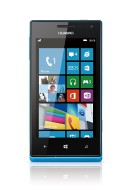
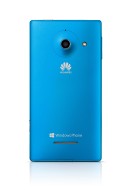
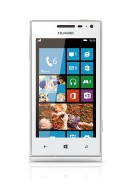
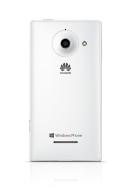
CES 2013 : Huawei Ascend W1 now official, company's first WP8 device


Huawei looks keen on keeping CES 2013 interesting and is making another announcement in the first day of the show. The company has just unveiled ts first Windows Phone 8 smartphone called Ascend W1.
The Ascend W1 brings a reasonable array of features and should come with a pretty attractive price tag. It's build around a 4" WVGA (480 x 800) IPS LCD and has a profile 10.5 mm thick. A dual-core 1.2 GHz Krait processor and the Adreno 305 GPU power the whole thing while a 5 MP camera with 720p video recording takes care of photography needs.
The 4" screen uses full lamination technology that should help enhance outdoor visibility.
   
Huawei Ascend W1
The Huawei Ascend W1 will hit China and Russia this month while Western Europe, Middle East and USA should be expecting it next. The price isn't clear as of now but it should be along the lines of the HTC Windows Phone 8S or lower.
Huawei bragged about the W1 extra long battery life, claiming a 470 hour stand-by. The Ascend W1 utilizes a power saving technology that saves 30% power consumption, letting the 1950 mAh battery last longer than it normally should.
The Huawei Ascend W1 will be available in blue, red, black and white. We cannot overlook the resemblance between the Ascend W1 and recent offerings by HTC but colorful and fresh seems to be the Windows Phone 8 thing these days.
Here's the official product page.

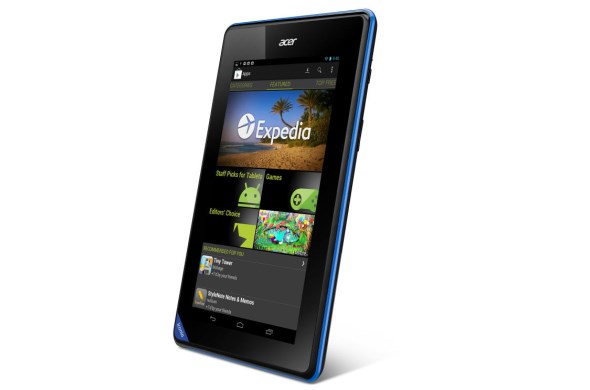
CES 2013: ACER OFFICIALLY REVEALS ICONIA B1 TABLET, AT UNDER RM 500 (USD 150)

While it might be not be as cheap as what it has been previously  rumored, Acer Iconia B1-A71’s price tag of under RM 456 (USD 150) is still quite attractive. Officially announced by Acer just moments ago, the 7-inch tablet is targeted for new and young users as well as an additional tablet for a family.
It is actually quite obvious on how Acer managed to keep the tablet’s price down. For starters, it is only equipped with 8GB worth of internal storage which is fortunately is expandable via MicroSD card. Furthermore, it doesn’t come with any cellular network capability and rear camera. Instead, the tablet is equipped with only Bluetooth 4.0 and Wi-Fi connectivity as well as a 0.3-megapixels front-facing camera.
On another hand, the new Acer Iconia B1-A71 runs on Android Jelly Bean and is powered by a 1.2GHz Mediatek 8317T dual-core processor together with 512MB of DDR3 RAM which are not too shabby at all. Weights at 320g, other features included into the tablet are 7-inch capacitive multitouch display with a resolution of 1024×600, built-in speaker, 3.5mm audio jack, USB 2.0 micro-USB port, GPS and 2710mAh battery.
All in all, the new Acer Iconia B1-A71 is pretty much in the same class as Google Nexus 7 by ASUS but is it attractive enough for Malaysian consumers? Well, we believe that will be up on its actual price tag once or if Acer Malaysia actually decides to release it in our market.

CES 2013: QUALCOMM REBRANDS SNAPDRAGON TIERS TO 800, 600, 400 AND 200

The Qualcomm Snapdragon family of SoC processors are well-known among smartphones and tablet users since many devices are actually powered by one. However, Qualcomm will be renaming the tiers in its Snapdragon family from previous S-based designation (S1, S2, S3 and S4) which reflect the processor’s generation to numeric system (200, 400, 600 and 800) starting from this year onwards.
As one might expect, the numeric system corresponds to the performance level of each Snapdragon’s family member. Here’s a summary of each Snapdragon tiers under the new system:
Snapdragon 800 Processors: designed to deliver blazing fast apps and web browsing, visually stunning graphics, breakthrough multimedia capabilities, seamless communications virtually anytime, anywhere, and outstanding battery life for premium smartphones, Smart TVs, digital media adapters and tablets.
Snapdragon 600 Processors: designed to deliver outstanding performance for today’s coolest apps, fast web browsing, seamless connectivity and great battery life for mid-high tier smartphones and tablets.
Snapdragon 400 Processors: are designed to deliver the performance, features, connectivity and battery life that consumers expect in high volume smartphones and tablets.
Snapdragon 200 Processors: are designed to deliver a valued balance of performance, robust connectivity and better battery life for entry level smartphones.
The newly announced Qualcomm Snapdragon 600 and 800 processors are the first group of Snapdragon processor to be introduced under the new tier system. They are already available to device manufacturers for sampling right now, with products based on them are expected to be out in the market by the second quarter and middle of 2013 respectively.

As mentioned above, Qualcomm has announced two new Snapdragon processor series that are expected to power numerous premium and high-end mobile devices respectively later this year. One of them is the new Snapdragon 800 series processors which are currently the most advance processor series that the company has created
Among features that are available within the new Qualcomm Snapdragon 800 series processors are:
  • Quad-core Krait 400 CPU with clock speed of up to 2.3 GHz per core.
  • Adreno 330 GPU that offers 2 times better compute performance than Adreno 320.
  • Support for 2 x 32-bit LPDDR3 RAM at 800MHz with memory bandwidth of 12.8GBps.
  • Support for 4G LTE Cat 4 150Mbps and 802.11ac 1Gbps connectivity.
  • Support for UltraHD (4096×2304 resolution, also known as 4K) capture, playback and display at 30fps.
  • Support for DTS-HD, Dolby Digital Plus and 7.1 surround sound.
  • Dual Image Signal Processors for Qualcomm Snapdragon Camera, with support for computational camera
  • Overall performance boost of up to 75% better performance than the Snapdragon S4 Pro. 
Qualcomm has stated that the Snapdragon 800 series processors will not only appeared in future smartphones and tablets but also Smart TVs and digital media adapters. On another hand, the other new processor by Qualcomm – Snapdragon 600 – is not too shabby as well with features such as:
  • Quad-core Krait 300 CPU, with clock speed of up to 1.9 GHz.
  • Speed enhanced Adreno 320 GPU
  • Support for LPDDR3 RAM
  • Overall performance boost of up to 40% better performance than the Snapdragon S4 Pro processor.
With more than 50 combined design wins for both series of processors, expect to see quite a number of products running on either Qualcomm Snapdragon 800 or 600 processors soon enough. That being said, we do wonder at what price point that these devices are going to be especially considering the fact that they are going to be high-end and premium devices.
[Image: Qualcomm's Twitter]

CES 2013 : Closer look at Ubuntu Phone OS

Ubuntu Phone OS is a Linux-based operating system for smartphones that could show up in handsets that will hit the market in late 2013 or early 2014.
But Ubuntu’s parent company Canonical is already showing off early builds of the software running on the Samsung Galaxy Nexus smartphone — and in the coming weeks Canonical will release software that lets anyone install Ubuntu on a Galaxy Nexus to try the operating system early.
ubuntu Phone OS
While Ubuntu Phone OS shares many visual elements with the Unity desktop environment from the full desktop version of Ubuntu, the OS and the user interface have been optimized for mobile devices.
At this point that means, among other things, that you can’t just install full desktop apps like LibreOffice or GIMP on a device running the Phone OS. But eventually you may be able to do that. While those apps won’t run properly in phone mode if they’re not optimized for that UI, you’ll eventually be able to dock your phone to a keyboard, mouse, and monitor and run full desktop style apps on a big screen.
In other words, instead of synchronizing your music, movies, documents, and other data between your phone and your PC you’ll be able to treat your phone as your PC. Carry it in your pocket and it’s a phone. Plug it into a desktop docking station, and it’s your PC.
It’s an interesting idea, but Canonical clearly faces an uphill battle in making it happen. The company will have to convince handset makers to use the software, wireless carriers to support it, and users to actually buy products running Ubuntu Phone OS.
While an obvious target audience would be folks already running desktop Linux operating systems, the phone OS really feels a lot more like an Android, webOS, BlackBerry, or iOS kind of operating system than traditional Linux. There will be an app store, no official terminal app (that I’m aware of), and an emphasis on apps written in HTML5 or QML.
Canonical is also trying pretty hard to monetize the product. Not only will it involve the same Amazon shopping lens that’s caused controversy in the desktop Ubuntu community, but Canonical also plans to dedicate a portion of the apps menu to “apps available for download,” so it can show promoted apps as a way to generate revenue.
Fortunately, the system is based on open source software, which could make Ubuntu Phone OS much easier to hack and modify than most other smartphone operating systems. So I suspect if and when the software makes it to market, we’ll see an awful lot of third party customizations.

CES 2013 : NVIDIA introduces GRID cloud computing system for streaming games to PCs, tablets, more

Monday, 7 January 2013

NVIDIA sees cloud computing as the future of gaming… or at least part of the future. By offloading the work of rendering graphics to a powerful server, you can run top tier games on a device with a low power chip like a smartphone or a tablet. But that’s just one benefit.
Another is that you can play the same game on multiple devices including a PC, a tablet, or a set-top-box, and you can pick up exactly where you left off when switching from device to device, the same way you can pick up reading a Kindle eBook or watching a Netflix video across different devices.
So NVIDIA is launching a new product called GRID, which is essentially a powerful server with NVIDIA graphics.
grid_02
NVIDIA is marketing GRID to game makers that want to make their titles available via streaming, and a haf dozen companies have already signed on.
GRID clients will be available for PC or Android devices initially.
If the whole thing sounds familiar, that’s because it sounds a lot like the OnLive video game streaming service (which is facing serious financial difficulties) or Gaikai (which was acquired by Sony and may play a role in the next PlayStation console).
But NVIDIA says its system can stream HD-quality games with less lag than other cloud gaming services. We’ll have to wait for NVIDIA GRID to hit the streets before we can test that claim.

 
DroidXDA © 2012 | Designed by Bubble Shooter