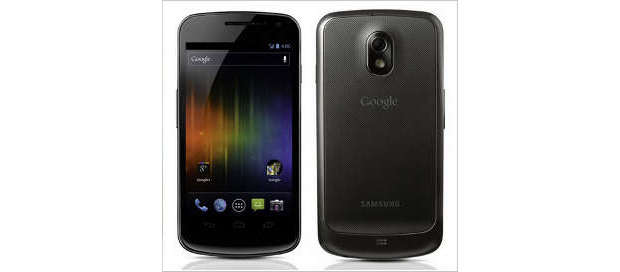
Showing posts with label galaxy nexus. Show all posts

News : AOKP Fresh Build Rollout With Jelly Bean 4.2 - Build 1 For Galaxy Nexus, Nexus 4 And Nexus 7 Available Now

Thursday, 3 January 2013

Good news, ROM enthusiasts: the Android Open Kang Project has released the much-anticipated first build of 4.2. Bad news: it's a completely new ROM, built from the ground up. That means that it won't be quite as feature-packed as you remembered, and device support is limited to the more popular Nexus models, at least for now. You'll also need to install a recovery that's compatible with 4.2 ROMs (the latest ClockworkMod and TWRP should do the trick) and do a full data wipe of your previous ROM. Warm up Titanium Backup.
jerryrice
For the MR1 release, only the Galaxy Nexus (Verizon and GSM flavors), Nexus 4 and Nexus 7 builds are available. On the bright side, most of the customization functions have already been brought over to the new builds, including customizable Navigation Bar targets and the like. The AOKP team even managed to cram a few new features in there, including unlimited lockscreen widgets, statusbar transparency, and fully customizable 4.2 statusbar toggles. The only real issue with the ROM so far is spotty support for the new multi-user function.
Downloads for the MR1 release and Gapps can be found at the link below. The next release, which should come in 2-3 weeks, will (hopefully) add support for the more prolific Galaxy phones.
Devices
  • maguro – Galaxy Nexus (GSM)
  • toro – Galaxy Nexus (Verizon)
  • grouper – Nexus 7 (WiFi)
  • mako – Nexus 4
Features
  • General UI
    • Custom boot animation
    • Custom carrier label
    • Notification background
    • Statusbar brightness slider
    • Recents RAM Bar & Kill All button
    • Power menu options
  • Lockscreen
    • Customizable text color
    • Volume wake & music controls
    • Allow any kind & unlimited number of widgets (new)
  • Navigation Bar
    • Fully customizable NavBar (buttons, color, transparency, widgets, etc.)
    • Menu arrow keys while typing (new)
    • Customizable NavBar Ring
  • Statusbar
    • Battery indicator styles
    • Clock styles
    • Signal styles
    • Statusbar transparency (new)
    • Customizable Statusbar Toggles (new, based on Google’s tiles)
  • LED Control
  • Custom Vibrations
  • Sound Settings
    • Less frequent notification sounds
    • Headphone action
    • BT connect action
    • Flip action
    • Quiet Hours (CM)
    • Disable safe headset volume warning (new)
  • Themes support (multi-user support still buggy, use at your own risk)
  • NFC Polling modes

News : LG Nexus 4 gets a full blown review

Sunday, 14 October 2012


After teasing us with a few images every other day, Belarusian website Onliner.by has now uploaded a full review of what has come to be known as the LG Nexus 4.

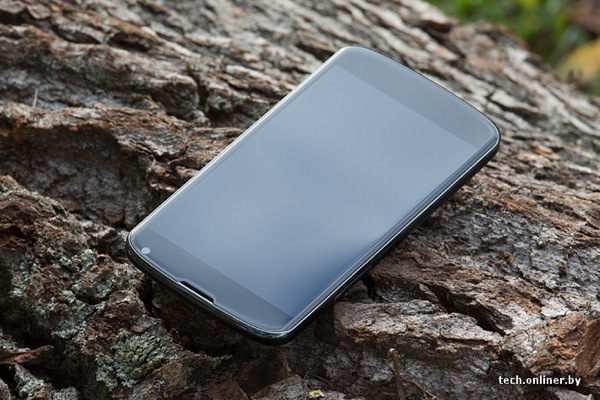
We can see from the images just how similar the Nexus 4 is to the Galaxy Nexus. The all-black, featureless face has become a signature of the Nexus line of phones since the Nexus S. The Nexus 4 looks practically identical to the Galaxy Nexus from the front, save for a chrome ring around the bezel. It even has the notification LED in the same place as the Galaxy Nexus.

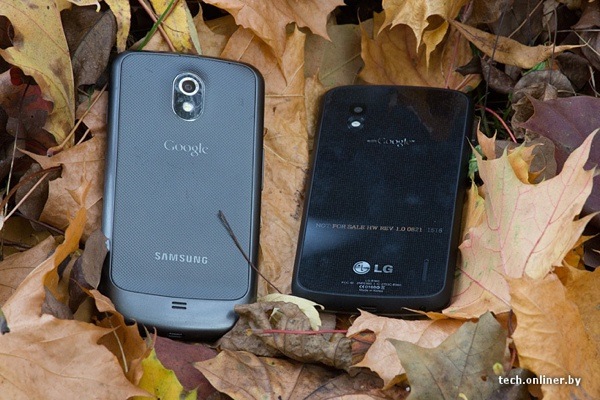
On the back, LG has dumped Samsung's matte grey back with the typical bump near the bottom for a flat glossy back with a peculiar dotted pattern. The back of this phone still says 'with Google", but then it also says 'NOT FOR SALE', so it could change by the time the phone goes for sale.
As mentioned before, the display uses an LCD panel, but the review mistakenly states the resolution as 1280 x 720, when the actual screenshots are in 1280 x 768 resolution. This particular device was running Android 4.1.2 but it is expected the final version to run on Android 4.2.

There are some images taken by the 8 megapixel camera on the back but the quality of these images is very mediocre. The details are all smudged and the colors and white balance in particular seem off. These images don't seem particularly better than those from Galaxy Nexus. If anything, they seem worse.
Another area where the Nexus 4 disappoints is in the synthetic benchmarks department. The AnTuTu and Quadrant scores are way low for something with a quad-core Snapdragon S4 and 2GB of RAM under the hood and even slower than the scores of the international One X with the Tegra 3 processor.
All of this can be put down to this being a prototype device and things could improve considerably in the final version. That could also explain why this particular unit had just 8GB of internal memory. With the launch of the next Nexus being said to be on October 29, we don't have to wait long to find out what the real deal would be like.
To read the full review of this prototype, click on the source link below.

LG Nexus smartphone expected to be announced on October 29

Thursday, 11 October 2012


The LG Nexus smartphone rumors are coming in thick and fast, with each one adding a new piece to the puzzle that is very close to being complete.
First off, there are couple of new pictures as seen below that show the phone in a better light. The back says 'with Google' that has raised a few questions, as Nexus phones usually have just the Google logo on the back. Then again, this is not a final product so the back could change by the time it releases. In fact, from what we have heard, the actual phone has a Nexus logo, with a big multi-colored 'X' in the middle.

Next bit of rumor pegs the worldwide launch date on October 29. This bit of information comes from a French publication Le Figaro. They also say that France itself will get the phone around December.
The next bit of info comes from Carphone Warehouse's inventory listing, that suggests that the phone will be called the LG Nexus 4 (which, just for the record, is an infinitely better name than LG Optimus Nexus) and that it will be sold in black and white.

Lastly, there is some disappointing bit of information regarding the internal storage of the phone. It is being said that the phone only has 8GB internal memory and just like previous Nexus devices there is no microSD card slot. If true, it will be an absolutely appalling decision on Google/LG's part. 8GB is way too less for a handset that otherwise sports top notch specifications. We honestly doubt Google/LG will ship the phone with so little memory and think this specification could be changed by the time the phone is announced.
We'll continue to put our ears to the ground and report anything new learned about this device.

Google releases Android 4.1.2 to the Nexus 7, brings minor updates

Wednesday, 10 October 2012


Google has silently launched an update to Jelly Bean AOSP bringing Android to version 4.1.2.
The update is currently slowly making its way to the Google Nexus 7 units around the globe, but it shouldn't be long until it reaches the Galaxy Nexus, the Nexus S and the Motorola XOOM.

Image credit: EETimes
As with any software update, the Android 4.1.2 release brings its fair share of bug fixes and promises a boost in performance. However, Google Nexus 7 owners will be happy to know it also enables landscape orientation to both the homescreen and lockscreen.
Other than that, Google doesn't say much about the update, which is 31.3MB in size and sports a JZO54K build number.
Source | Via

News : Purported images of the LG Nexus phone leak

Tuesday, 9 October 2012

We have waited months to get a peek at the next Nexus device but other than some random rumors we got nothing concrete. That is, until now. All of a sudden a whole bunch of images have surfaced, allegedly of the next Nexus phone expected to be announced this month and if there's one thing they have in common, it's that they have the LG logo on them.
The first set of images posted on the xda-developers forum look slightly different because the device apparently had some sort of case on the back that hid its actual design, not uncommon for unannounced prototype devices.
   
  
We can see from these images that the phone is made by LG and runs Android 4.1.2, which just seems like a slightly newer version of Jelly Bean.
But then these new set of images were sent to Android and Me, first posted on Onliner.by, that show the device in all its glory.
   
We see that the phone (model number E960, codename 'Mako') has a sleek shape with a completely flat back that has these crystal-like pattern inside that gradually becomes more pronounced as you go down the back of the phone. You can see the camera lens flush against the back with an LED flash (our guess would be an 8 megapixel sensor; anything more would have popped considerably out of the case) and a loudspeaker grille near the bottom. You can see the usual Google and OEM logos, the latter belonging to LG, in this case.
We don't see much of the sides but from what we can tell there is a power button on the right, the volume controls on the left and the headphone jack on the top. On the bottom is the microUSB port with two curious slots, possibly for some sort of a docking device.
On the front the phone looks remarkably like the Galaxy Nexus from Samsung, It has the same buttonless design, with the earpiece near the top edge and a front facing camera. Google has integrated the navigation controls at the bottom of the display once again. This area looks decidedly grayer than the black bezel of the phone, which suggests that it is an LCD, unlike the pitch-black AMOLED on the Galaxy Nexus. This shouldn't come as a surprise considering how deeply LG is invested in LCD technology.
That's all we can gather from these images. We are definitely hoping to see more of this phone in the coming weeks and learn more about it, especially on what's ticking inside that sleek body.

News : Carphone inventory reveals a Galaxy Nexus 2 and 32GB Nexus 7

Thursday, 4 October 2012

Rumors about a Galaxy Nexus 2 have been the talk of the town lately and CarPhone Warehouse employees must be curious as ourselves.
The following shot from the inventory system of the British retailer show us what might be an accessory for a Galaxy Nexus 2 and a 32GB version of the Nexus 7.
For all we know, this may not mean much. The listed screen protector may just be a second version of the Invisishield kit for the original Nexus.
The Nexus 7 tablet has not been announced in a 32GB flavor so far and the presence of a 32GB variant may as well be just a placeholder for such a product should it arrive some day. That's just how these retail chains operate.
But still, these days our over-eager geeky eyes would savagely feast on anything that has even a remote mention of a new Nexus. And we can't help sharing this with you.

Camera samples shot with Galaxy Nexus 2 I9260 leak on Picasa

Tuesday, 25 September 2012

It's been nearly a full year since the last Google Nexus phone was announced (though we witnessed the launch of the Nexus 7 tablet in the meantime). We've already seen some leaked specs of an update for the Galaxy Nexus but now we have photos uploaded to Picasa to back those up as well.
The EXIF info in the photos labels the device "GT-I9260" - the expected model number of the successor of the current Galaxy Nexus (I9250). Unfortunately, the photos were not shot at full resolution, so they can't confirm the upgrade to 8MP that the camera of the next Galaxy Nexus is rumored to receive.


What the photos do reveal however, is a F/2.65 aperture and a 4mm focal length. The Galaxy S III has an aperture of F/2.6 and a focal length of 3.6mm, while the Galaxy S II has an aperture F/2.65 and a focal length of 3.97mm, so it might be theoretically possible that the new Nexus phone may have the same camera as the Galaxy SII.
The firmware versions listed in the EXIF info in the two photos is I9260XXALI5 and I9260XXALI6.
In one of the photos, there's a portion of an Excel window with a table listing Bluetooth specs for something, but there's nothing interesting that can be made out.
Besides the camera, the Samsung I9260 Galaxy Nexus "Premiere" is supposed to have a better CPU (Cortex-A9 dual-core at 1.5GHz instead of 1.2GHz), a microSD card slot and the same 4.65" Super AMOLED HD screen.
Would it be okay if the next Galaxy Nexus really isn't based on the Galaxy S III? The OS it will run is still not clear - typically, a Nexus device would come with the latest available iteration of Android, but Jelly Bean is still very fresh (barely powering a percent of all Androids), so it might be too early for Key Lime Pie.
Source | Via (in Japanese)

Rumor : Samsung Galaxy Nexus successor said to pack a 1.5GHz dual-core CPU, same 4.65-inch screen

Tuesday, 21 August 2012


Samsung Galaxy Nexus successor said to pack a 1.5GHz dual-core CPU, same 4.65-inch screen
Before we present you with the latest bit of spicy Android news, allows us to stress that what you are about to read is just a rumor. With that out of the way, Samsung fan site SamMobile is speculating that a successor to the Galaxy Nexus is in the works. The handset in question is said to be codenamed "Superior" and supposedly carries a model number GT-i9260. As a side note, the GT-i9250 is the HSPA+ version of the Samsung Galaxy Nexus we all know and love.

On the hardware side of things, the rumored Samsung Galaxy Nexus successor is equipped with a 1.5GHz dual-core Cortex-A9 processor and a 4.65-inch HD Super AMOLED screen, according to the source of this rumor. The camera on its back is said to be of 8 megapixels and a 2-megapixel front-facing shooter is allegedly fitted as well. Interestingly, the smartphone is supposed to have a microSD card slot, which is really hard to believe given Google's disdain for removable storage.

Samsung Galaxy Nexus successor said to pack a 1.5GHz dual-core CPU, same 4.65-inch screen
Again, keep in mind that rumors like these should not be trusted just like that, or at least not until some solid evidence backs them up. Having that in mind, don't get your hopes high just yet. Sure, a new Nexus smartphone will most likely come one day, but whether it will be what this rumor claims remains to be seen.

source: SamMobile

Samsung Galaxy Nexus successor said to pack a 1.5GHz dual-core CPU, same 4.65-inch screen

ROM:CyanogenMod quietly releases CM9 stable (for the Galaxy Nexus)

Thursday, 9 August 2012


It’s been almost a year since the developers behind the popular CyanogenMod version of Android began working on CyanogenMod 9. After months of release candidates and nightly builds, the team has released the first stable version of CM9 for the GSM Samsung Galaxy Nexus smartphone.
CyanogenMod 9 is based on Google Android 4.0 Ice Cream Sandwich. It includes a number of software tweaks, performance optimizations, and customization options, as well as custom artwork.
CyanogenMod 9 logo
While the Galaxy Nexus is the first device to get official support for CM9, there are nightly releases available for dozens of additional phones and tablets. Many of these will likely be updated to CM9 soon.
One of the key advantages to CyanogenMod is that the custom Android firmware lets users update phones and tablets to the latest versions of Android even if the phone manufacturer doesn’t offer an official upgrade path. If you’ve been stuck on Android 2.3 indefinitely, CM9 (or other custom ROMs) provide an unofficial way to run more recent software.
But it took a long time for the CyanogenMod team to make the transition to Android 4.0 since the code is so dramatically different than that for Android 2.3. The move from Android 4.0 to Android 4.1 is expected to happen much more quickly, and CyanogenMod 10 is already under development.
via reddit

Android 4.1 Jelly Bean rolling out to GSM Galaxy Nexus

Wednesday, 11 July 2012

We are not even mid-way through July and Google has already initiated the process of releasing the Android 4.1 Jelly Bean update to Nexus devices as promised at the Google I/O.

The first device to receive the update will be the GSM variant of the Galaxy Nexus (maguro). Users of this device will see the notification for the update in the next few days. If you are running the version of Jelly Bean provided on the developer units at Google I/O you will still receive this update as it is newer than the developer version.
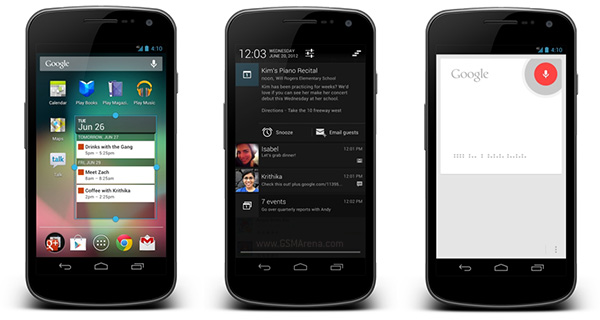
After updating, you will see all the features shown off at the Google I/O, including Project Butter, Google Now, improved notifications, improved homescreen, improved keyboard, improved camera app and many more.
Other devices such as the CDMA Galaxy Nexus (toro), Nexus S and the Motorola XOOM will receive the update shortly after the GSM Galaxy Nexus.

News :Galaxy Nexus banned in the US, infringes on four Apple patents

Saturday, 30 June 2012


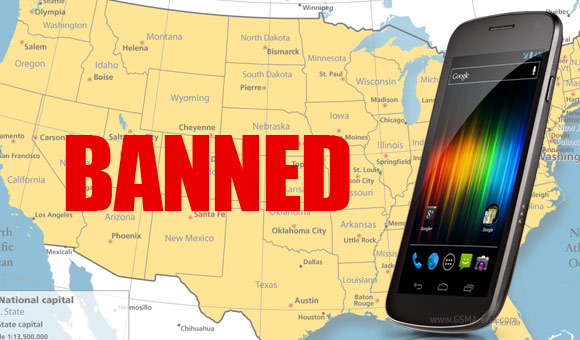
Apple has just been granted a temporary injunction against Galaxy Nexus sales in the United States. US Court ruled against Samsung in the patent case, which was initiated in February, but gets its first ruling just now.
Judge Lucy Koh decided that Samsung has infringed four patents, although one specific patent weighs in towards this decision - patent number 8,086,604 ('604). It basically refers to a device being able to search multiple sources through a single interface (Apple's Siri).
The rest of the patents Apple accuses Samsung (and Google) of infringing are patent 5,946,647 (actionable linking), patent 8,046,721 (slide-to-unlock) and patent 8,074,172 (touch screen word suggestion).
For the injunction to go into effect, Apple must post a bond worth $96 million. It's highly likely the final judgement of the US Court to be of the same kind, provided Samsung isn't able to prove it hasn't infringed on the patents in question.
The Court has ruled that if the Galaxy Nexus availability continues it would cause irreparable harm to Apple in the form of lost market share. This was a result of Google highlighting its "Quick Search Box" in Android as "core user feature on Android" ergo on the Galaxy Nexus too.
Via | Source

Android 4.1 Jelly Bean confirmed in the Google Play Store

Friday, 22 June 2012

Rather unintentionally, Google has just let the name of the next Android release slip. As expected, it's going to be called Jelly Bean and will carry the 4.1 version number.
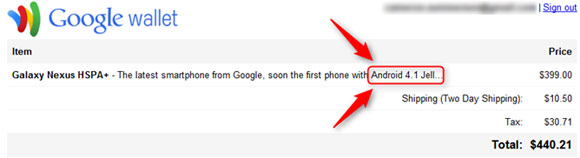
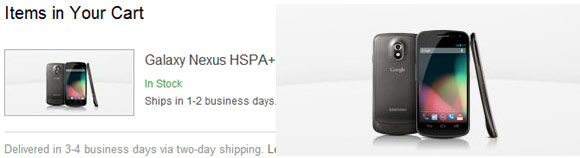
The leaked information can currently be seen on the US Play Store when purchasing a Galaxy Nexus HSPA+ smartphone described as "soon the first phone with Android 4.1 Jell..." You get the idea.
Additionally, there's also an image showing just a bite of the visual changes present in Jelly Bean. That's a new wallpaper and a visually refreshed Google search bar on the homescreen. The picture is of low resolution, but still the changes are somewhat visible.
This further confirms that Jelly Bean will be a minor update to Ice Cream Sandwich and we should expect Key Lime Pie to be Android 5.0 and probably launch with a new Nexus smartphone in the winter? There's no doubt then that Google will show Jelly Bean in action at the Google I/O Conference on June 27.
Source | Via

Fast Capture demoed on Xperia ion, beats Galaxy Nexus

Saturday, 14 January 2012


Xperia Fast CaptureOne of the big marketing points that Sony has been talking about its new smartphones is Fast Capture. Sony claims that you can take a picture from standby in just 1.5 seconds on both the Xperia ion and Xperia S. This was put into practice by the Phandroid team, who decided to put the Xperia ion up against the Galaxy Nexus to see which handset could snap a picture the quickest.
Galaxy Nexus runs Android 4.0 ICS, which features camera optimisations including zero shutter lag. However, this was still not enough to beat the Xperia ion, which was markedly quicker. Check out the video showdown below.

REVIEW :: Motorola Razr XT910 vs Galaxy Nexus GT-i9250

Wednesday, 21 December 2011

There's neck to neck competition between the new Motorola Razr and Google Nexus, but a clear winner does emerge.
Google and Motorola, despite being sister concerns, will compete in the Android smartphone market. Motorola has already made its top of the line Razr XT910 available in Malaysia for RM1999 RSVP While the Google-Samsung Galaxy Nexus is expected by mid December, there is no hint of the pricing as yet.
Here we've compared the specifications offered by both these handsets.
Design and looks
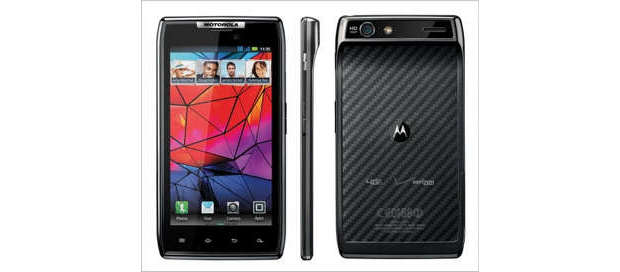
In terms of physical design and build Motorola Razr certainly steals the attention with its 7.1 mm slimness; while Galaxy Nexus is 8.8 mm thick. Not to forget that the back panel of the Motorola Razr is made of Kevlar plastics, which makes it strong enough to survive blows. The Galaxy Nexus comes with a larger outlook, appearing to be a mash-up of Samsung Galaxy S II and Google Nexus S.
The slimmer profile of Motorola Razr certainly looks appealing while the bigger display with thin body makes Galaxy Nexus equally desirable.
Display
Both Motorola Razr and Galaxy Nexus come with a Super Amoled display with PenTile pixel arrangement scheme. Razr comes with a 4.3 inch Super Amoled display that bears a qHD (960 x 540 pixel) resolution. However, the Razr's display has a pixel arrangement density of 256 pixels per inch.
On the other hand, the Galaxy Nexus has a 4.65 inch Super Amoled HD display with 1280 x 720 pixel native resolution, and pixel density of 316 pixels per inch. Apparently it's the Galaxy Nexus that bags eyeballs when it comes to actual display, compared to the Motorola Razr.
Software
With the Galaxy Nexus, Google debuts Android 4.0.1 Ice Cream Sandwich operating system update with a fresh interface and several new features. Motorola Razr comes with Android 2.3.5 Gingerbread and there's no information on when it'll get the Ice Cream Sandwich update.
Clearly, Galaxy Nexus wins even where software is concerned.
Processor and graphics
Both smartphones use dual core processors from Texas Instruments.
Galaxy Nexus comes with a dual-core 1.2 GHz TI OMAP 4460 mobile processor with PowerVR SGX 540 graphics chip clocked at 384 MHz.
Motorola Razr houses a 1.2 GHz TI OMAP 4430 mobile processor with PowerVR SGX 540 graphics chip and is likely to be clocked at 304 MHz. So, Galaxy Nexus might turn out to be a better graphics performer.
Camera
Google and Samsung have surprisingly packed only a 5 megapixel image sensor at the rear of the Galaxy Nexus, though it does record 1080p full HD video. The phone's front facing 1.3 megapixel camera is capable of recording 720p HD video. However, it's uncertain whether this is Galaxy Nexus' feature or Android 4.0's.
Motorola has added an 8 megapixel camera which too is capable of recording 1080p full HD video at 30 frames per second. If the 1080p full HD video recording quality is compared, then this handset might just turn out to be a clear winner.
There are no details whether Razr's front facing 1.3 megapixel camera can record 720p HD video or not.
Memory and storage
Though each smartphone carries 1 GB of RAM, there is a difference in the type of memory used. For instance, the Motorola Razr with 1.2 GHz TI OMAP 4430 is most likely to have a 1 GB LPDDR2 RAM while the Galaxy Nexus with 1.2 GHz TI OMAP 4460 will have 1GB LPDDR3 RAM.
The crucial difference lies in the higher memory bandwidth and faster performance promised by the LPDDR3 used in Galaxy Nexus, as opposed to the one used in Razr.
Motorola offers 16 GB on-board storage and a memory card slot to add up to 32 GB. Meanwhile Galaxy Nexus lags behind with 16 and 32 GB onboard storage options with no expandable memory slot.
Network and SIM
Galaxy Nexus will have an HSPA+">HSPA+ version for India, and might come with a 4G LTE chip. If that happens, then the Galaxy Nexus would offer maximum download speeds between 8 Mbps to 25 Mbps. However, the crucial difference between both handsets lies in the type of SIM used — yes, the Motorola Razr users a microSIM.
Near Field Communication, WiFi and Bluetooth
Galaxy Nexus comes with Near Field Communication support while Motorola Razr doesn't. Instead, Motorola promotes the handset along with its webtop app that allows hooking up the phone to a larger screen.
Galaxy Nexus will come with Bluetooth 3.0 while the Motorola Razr will feature Bluetooth 4.0, which as of now looks good but has no real-world advantage to it. Besides, Galaxy Nexus comes with dual-band WiFi support (2.4 GHz and 5 GHz) compared to the Razr's slower single band.
Battery
Galaxy Nexus packs a 1750 mAh battery while Motorola Razr packs a 1780 mAh battery. It may appear to be a number game but Android 4.0 ICS is expected to bring better power management compared to Android 2.3.5 Gingerbread, used in Motorola Razr.
Besides, the Motorola device comes with a non-removable battery which is why it is so thin whereas the Galaxy Nexus comes with the conventionally removable battery.
Conclusion
When compared head to head in several departments, the overall winner turns out to be Galaxy Nexus. It loses in the design, camera and storage expansion to Motorola Razr. Evidently, Galaxy Nexus would be the overall package which a keen technology enthusiast would love to possess.

 
DroidXDA © 2012 | Designed by Bubble Shooter