Showing posts with label intel atom. Show all posts

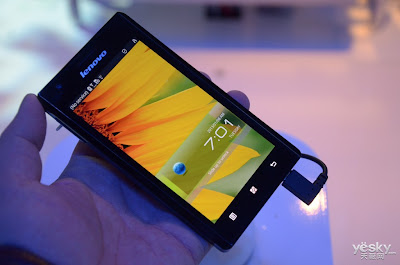
CES 2013: Lenovo K800 With Intel Atom Makes Appearance At Intel Booth.

Tuesday, 8 January 2013


At the CES 2013, Lenovo K800 quietly appears at the Intel booth instead of Lenovo booth. It was the first Intel powered smartphone that launched in China. 


Lenovo K800 features a 4.5-inch display with 720p HD resolution, Android 4.0 Ice Cream Sandwich, 8-megapixels of rear camera, 1.3-megapixels of front camera, bluetooth, WiFi and others. 

The main attention is this Lenovo K800 powered by 1.6GHz Intel Atom Z2460 processor and 1GB of RAM. The appearance of Lenovo K800 allows Intel to showcase more devices that powered its mobile processor. 

News : Intel Reveals New Ivy Bridge CPUs for Tablets

Tuesday, 11 December 2012

Microsoft’s Surface tablet may not be doing as well as the company hoped, but Intel is going full speed ahead on tablet processors. The chip maker intends to release five new Ivy Bridge CPUs for slate computers that feature low power consumption without, one hopes, a hit to performance. They will be available in the first quarter of 2013.
Perhaps it’s not a coincidence that the Surface Pro will also be out in the first quarter. It’s a good bet that these new chips may power that tablet and many other Windows 8 based slates, hybrids, and convertibles.
Intel Ivy Bridge CPU for Tablets
The new “Mobile Y” chips mostly have the new Core i branding with one lone Pentium in the mix and will clock in at 1.1 - 1.5 GHz. The Core i5 and i7 chips have Turbo Boost ability for overclocking up to 2.6GHz. Good news is that the Core i3, i5, and i7 models get Intel’s HD Graphics 4000.
Overall, these will be much more powerful than the Intel Atom CPU some Windows tablet manufacturers still employ, yet will hopefully get close to that chip’s efficiency.
Long battery life coupled with good performance is the holy grail, especially with tablets. And Intel has some catch up to do in this category when it comes to that balance. New ARM-based chips are on the horizon from Qualcomm, Samsung, and other big players. ARM processors can only run the RT version of Windows, which isn’t all that popular right now.
Intel’s x86 processors support full Windows 8, but apparently tablets with this operating system aren’t exactly flying off the shelf. Issues with the operating system itself aside, getting the performance/efficiency balance right can go a long way toward making tablets people will snatch up without hesitation.
It will be interesting to see the tablet crop that comes out early next year.

Intel wants to launch 48-core chips for phones… tablets within a decade

Wednesday, 31 October 2012


Intel logoIntel is just starting to get its feet wet in the smartphone space thanks to new low power Atom processors. But one day the chip maker hopes to ship 48-core microprocessors designed for smartphones and tablets.
And according to ComputerWorld, that day is around 5 to 10 years away.
If you look at the pace of advancements over the past few years that goal seems pretty reasonable. In fact, by the time 48-core smartphone chips are available, they probably won’t seem all that revolutionary. After all we’ve moved from single core to quad-core chips in mobile devices in just the last few years.
In fact, it’s only been about 5 years since the first iPhone went on sale, and today that device looks pretty dated.
While 48 processors cores might sound like overkill, there are good reasons to add multi-core capabilities to chips. It allows a phone, tablet, or other device to execute multiple instructions simultaneously without sharing resources. This leads to faster performance, better support for multitasking, and lower power consumption (since multiple cores can run at lower voltages than a single core trying to perform multiple tasks at once).
That doesn’t just mean it’ll be easier to listen to music while surfing the web. Applications designed to take advantage of multi-core chips could benefit as well. For instance games could use different processor cores to render different graphics effects, or a video player could decode multiple video frames at once.
While Intel marches towards 48-cores, I don’t expect competitors ARM or AMD to sit still. All told, the phone and tablet space could look as different 5 years from now as it did the day before the iPhone was unveiled.

Intel ports Android 4.1 to run on Medfield chips

Thursday, 13 September 2012

Chip maker Intel says Android 4.1 Jelly Bean is ready to run on phones and tablets with low power Intel Atom Medfield chips — not that there are all that many of them in the wild yet.
Still, PC World reports that once handset makers and wireless carriers are ready, they’ll be able to update those devices to run the latest version of Google’s mobile operating system.

Xolo X900
Xolo X900 Android 2.3 smartphone with Intel Medfield
Android 4.1 Jelly Bean brings improved responsiveness, better text input and voice recognition capabilities, and easier-to-manage home screens, among other things.
Intel is a relative newcomer to the smartphone space. Its Medfield chips are among the first x86 processors from the company which offer the kind of connectivity features and low power consumption we’ve come to expect from ARM-based chips.
Some Android apps may not play well with x86 chips unless they’re ported to run on Intel’s platform. If developers used the Android SDK to code their apps, they should be fine, but some apps developed with the Android NDK may not run unless developers port them to support x86 architecture.
Soon we’ll also see more powerful Atom chips designed for tablets like the HP Envy X2. These new chips, code-named Clover Trail, will offer more PC-like performance along with low power consumption and connected standby mode, letting your laptop or tablet connect to the internet every 15 minutes (or so) to download your latest email messages, social network updates, and other details so that the next time you turn on the device your data will be up to date.
But while Medfield is designed to work with Android (among other operating systems), Clover Trail chips are more powerful, and we’ll likely see them primarily in Windows 8 computers. In other words, the new chips (and computer that use them) will probably hit the streets by the time Windows 8 launches in late October.
via reddit

[news]Next-gen ultrabooks to offer 9 hour battery life, $699 cost

ntel’s next-generation Core processors will use less power and offer better performance than today’s chips. But what does that mean for ultrabooks and other notebooks that will ship with Intel Haswell chips in 2013?
The folks at TechEye claim to have seen leaked documents from Intel showing the company’s guidelines for upcoming ultrabooks.
Haswell
Intel gets to decide what goes into an ultrabook (to some degreee), because the company designed the platform and trademarked the heck out of it. PC makers can make as many thin and light laptops as they like, but unless they meet certain criteria, they’re not ultrabooks.
And in order to be a Haswell ultrabook, TechEye reports that basic models have to offer 9 hours of battery life, 16GB or more of solid state storage, voice assist features, a 720p camera for video chat, wireless display technology, and a $699 bill of materials or less.
That doesn’t necessarily mean these ultrabooks will sell for under $699 — but it does mean that Intel doesn’t want PC makers loading these computers with extraordinarily expensive components. That will help keep the starting retail prices relatively low.
Higher-end models with larger solid state disks and other premium features will likely cost more. Unfortunately, while Intel’s sample configuration includes a 13 inch, 1920 x 1080 pixel display, HD displays aren’t a requirement. Haswell ultrabooks only need a 1366 x 768 pixel or higher resolution display to meet Intel’s guidelines.
Keep in mind, there’s a chance this “leaked” document could be fake… or that things could change by the time Haswell chips hit the streets in mid-2013.

 
DroidXDA © 2012 | Designed by Bubble Shooter